A celebration of ideas, cultures, curiosity and the sheer pleasure of discovering something new.
For five extraordinary months, my hometown felt like the centre of the world.
EXPO 2000 transformed Hannover into a place where countries, cultures and visions of the future met. I went back again and again, perhaps twenty times. Sometimes to discover another pavilion or see a cultural event. Sometimes for a concert. And sometimes for no particular reason at all.
Just to be there.
To move through the grounds, sit by the water, watch the cable cars floating overhead, hear music somewhere in the distance and wonder what might be waiting around the next corner.
A world of ideas
The EXPO was more than a collection of national pavilions. Architecture itself became part of the exhibition. Buildings were asked to express ideas about identity, resources, technology and the future, often before you had even stepped inside.
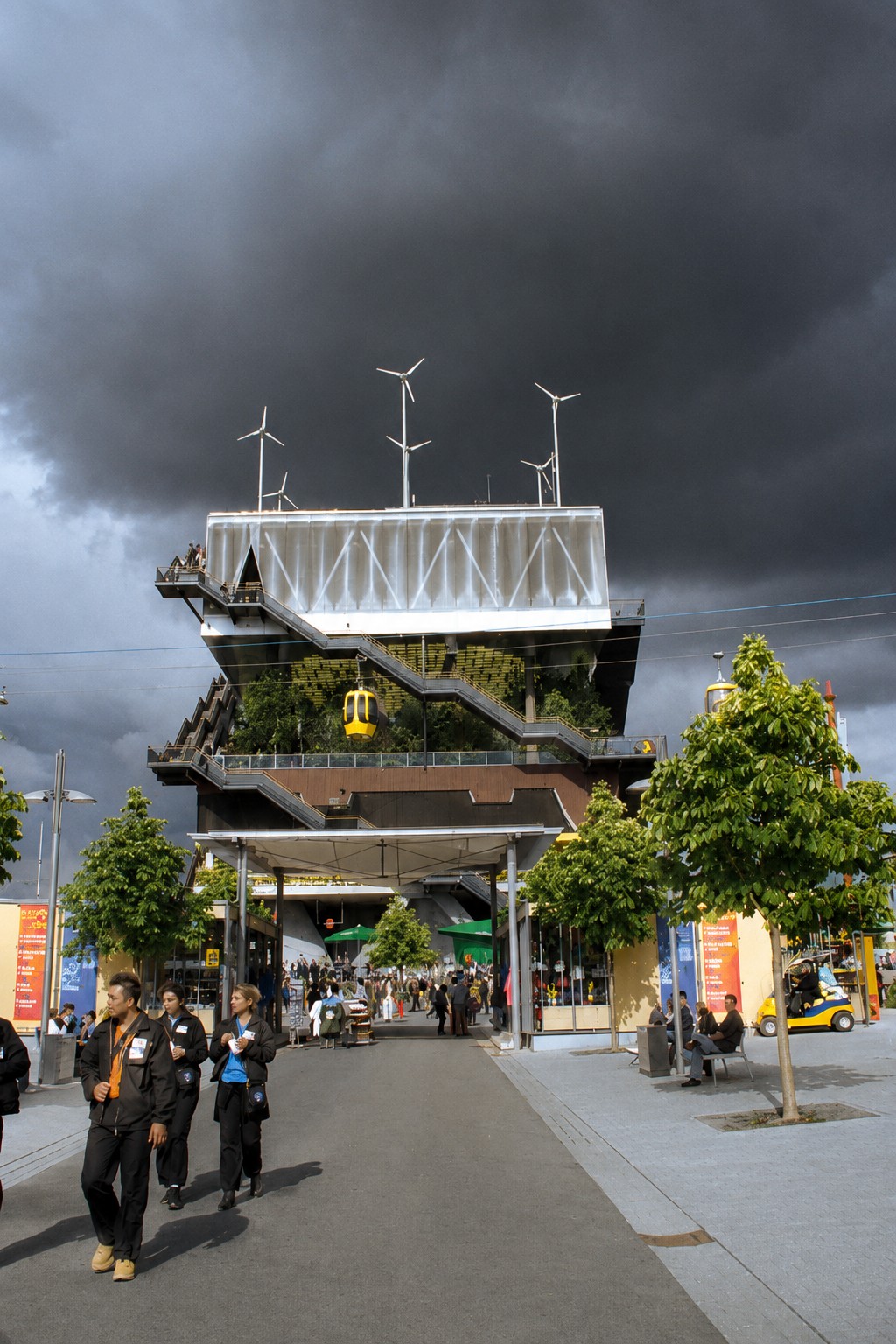
The Dutch pavilion was perhaps the clearest example. MVRDV turned the building into a vertical landscape: different Dutch environments were stacked one above another, with a forest suspended high above the ground and wind turbines at the top. It was less a conventional building than an experiment in how landscape, infrastructure and architecture might share the same limited space.
The Netherlands pavilion
Other pavilions took completely different approaches. Some were designed to be dismantled, recycled or given a second life after the EXPO. Materials became part of the story: timber, glass, steel, membranes and water were not simply surfaces, but ways of translating the EXPO's central theme of people, nature and technology into physical form.
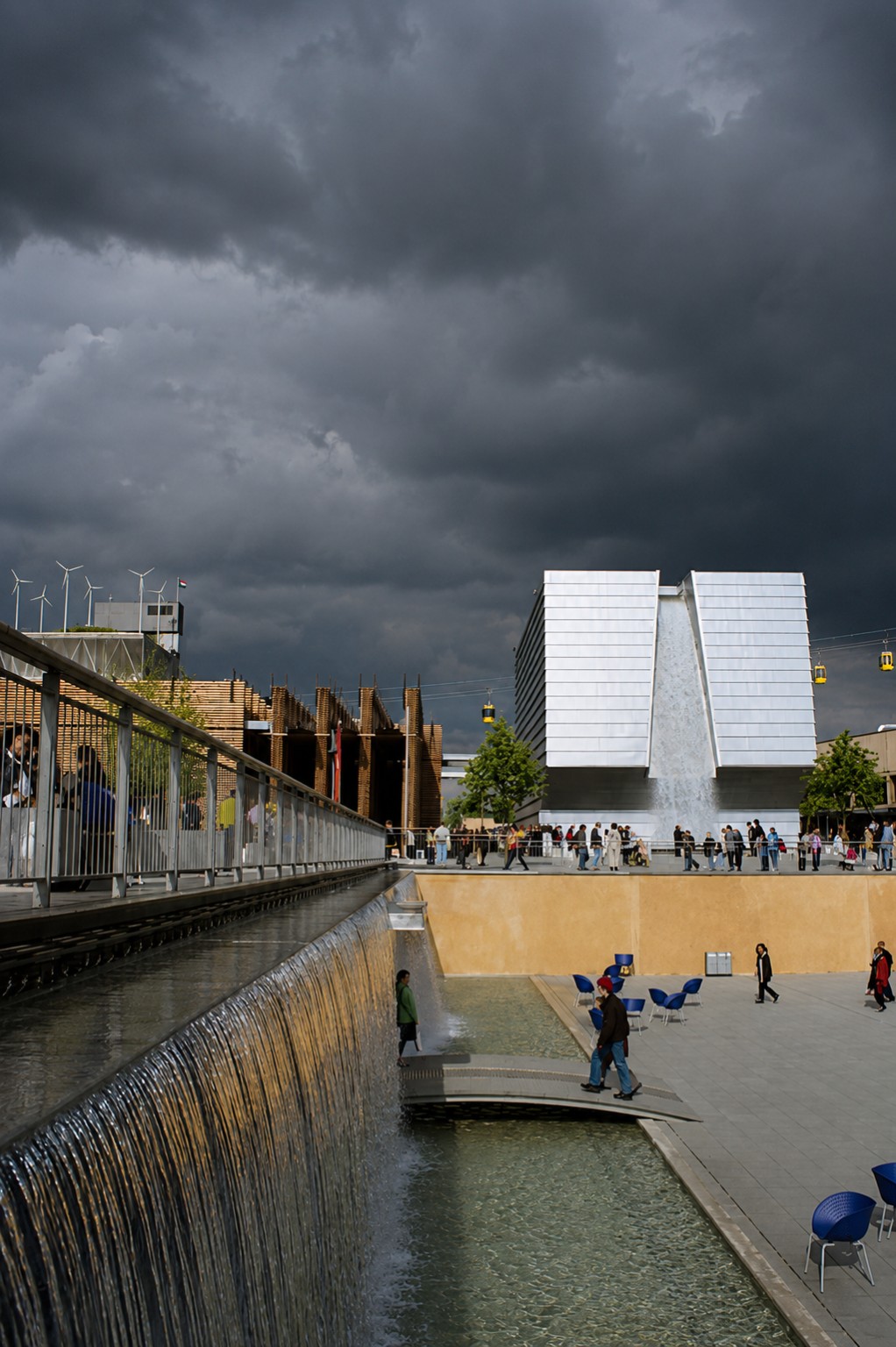
One of the most striking examples was Iceland's pavilion. Its steel structure was wrapped in a translucent membrane over which water continuously flowed, turning the exterior into a kind of man-made waterfall. Inside, water remained at the centre of the experience, culminating in an artificial geyser that shot upwards through an opening in the roof.
Architecture, water and one of those dramatic EXPO skies · Icelandic Pavilion
Germany as host
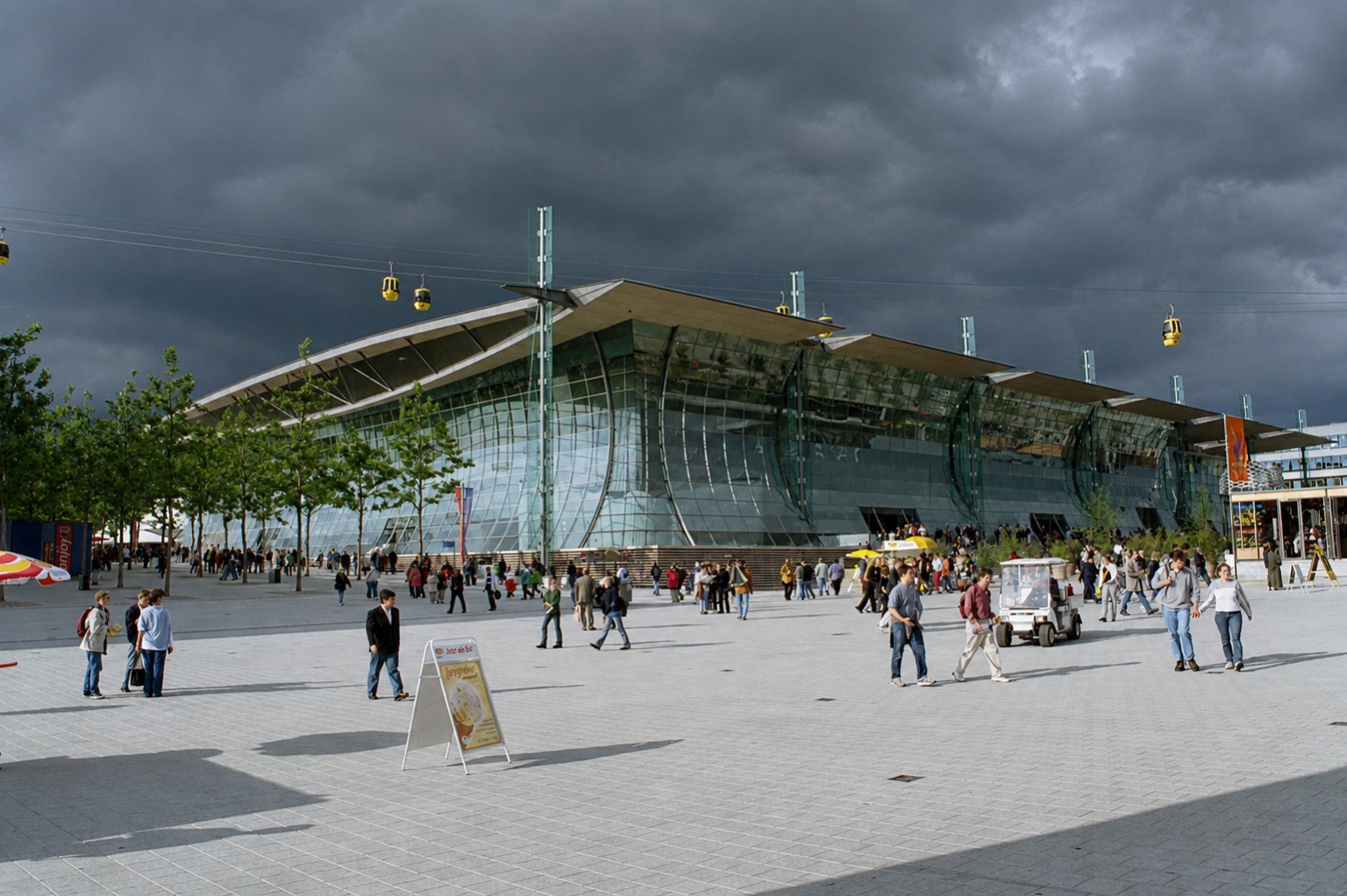
The German Pavilion had a different character again. As the host country's pavilion, it was conceived around lightness, transparency and an unusually open combination of glass, wood and steel. Its inward-curving glass façade was covered by a sweeping wooden roof resting on glass-and-steel supports. The architecture itself echoed the EXPO motto: Humankind – Nature – Technology.
The German Pavilion beneath the ever-changing EXPO sky
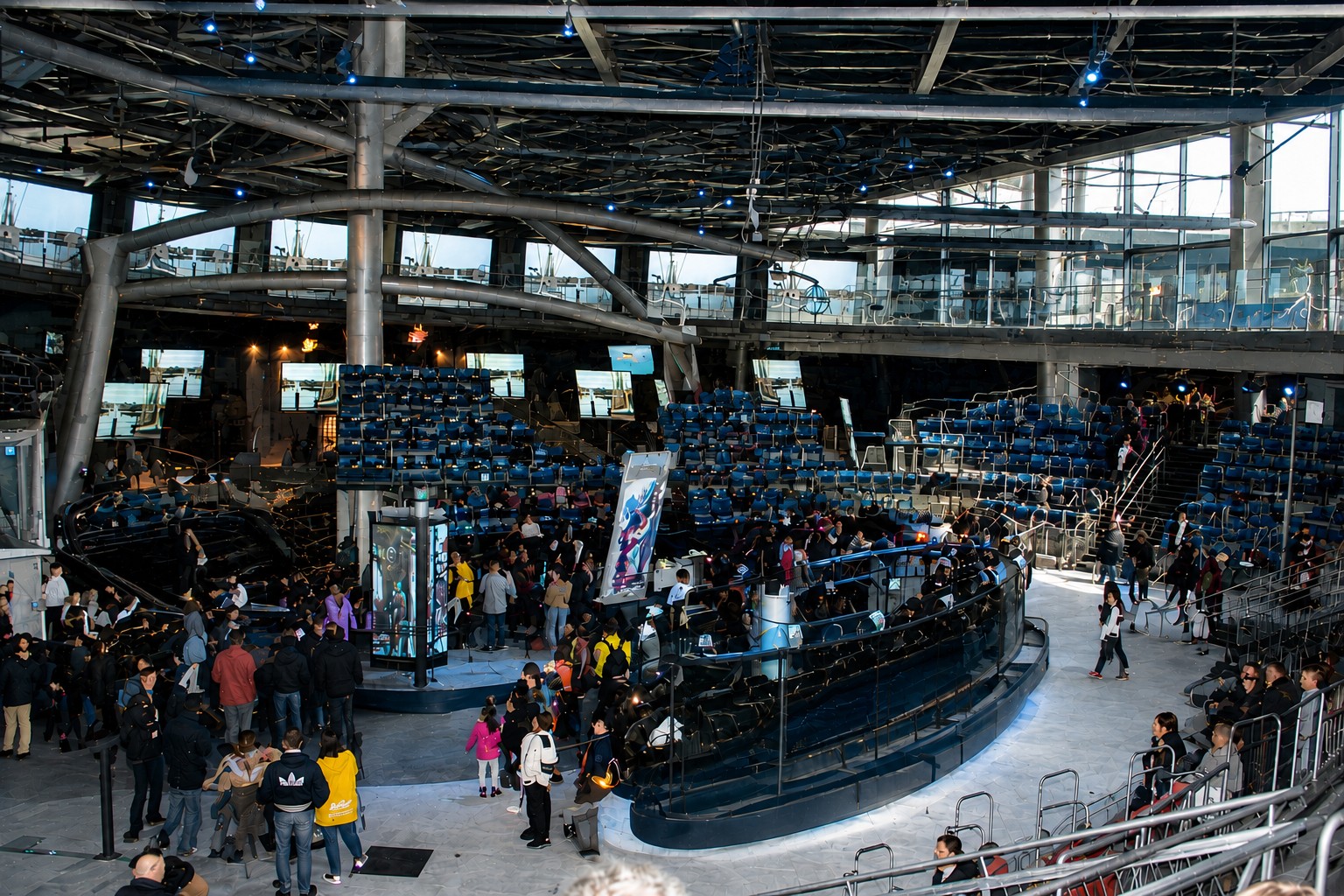
Inside, the pavilion was deliberately more than a national showcase. Visitors entered the Germany Idea Workshop, where sculptures, portraits and installations referred to German achievements and ideas. From there, bridges at different levels led through an immersive spatial experience surrounded by moving images, offering changing perspectives on contemporary Germany.
Inside the German Pavilion: bridges, levels and moving images
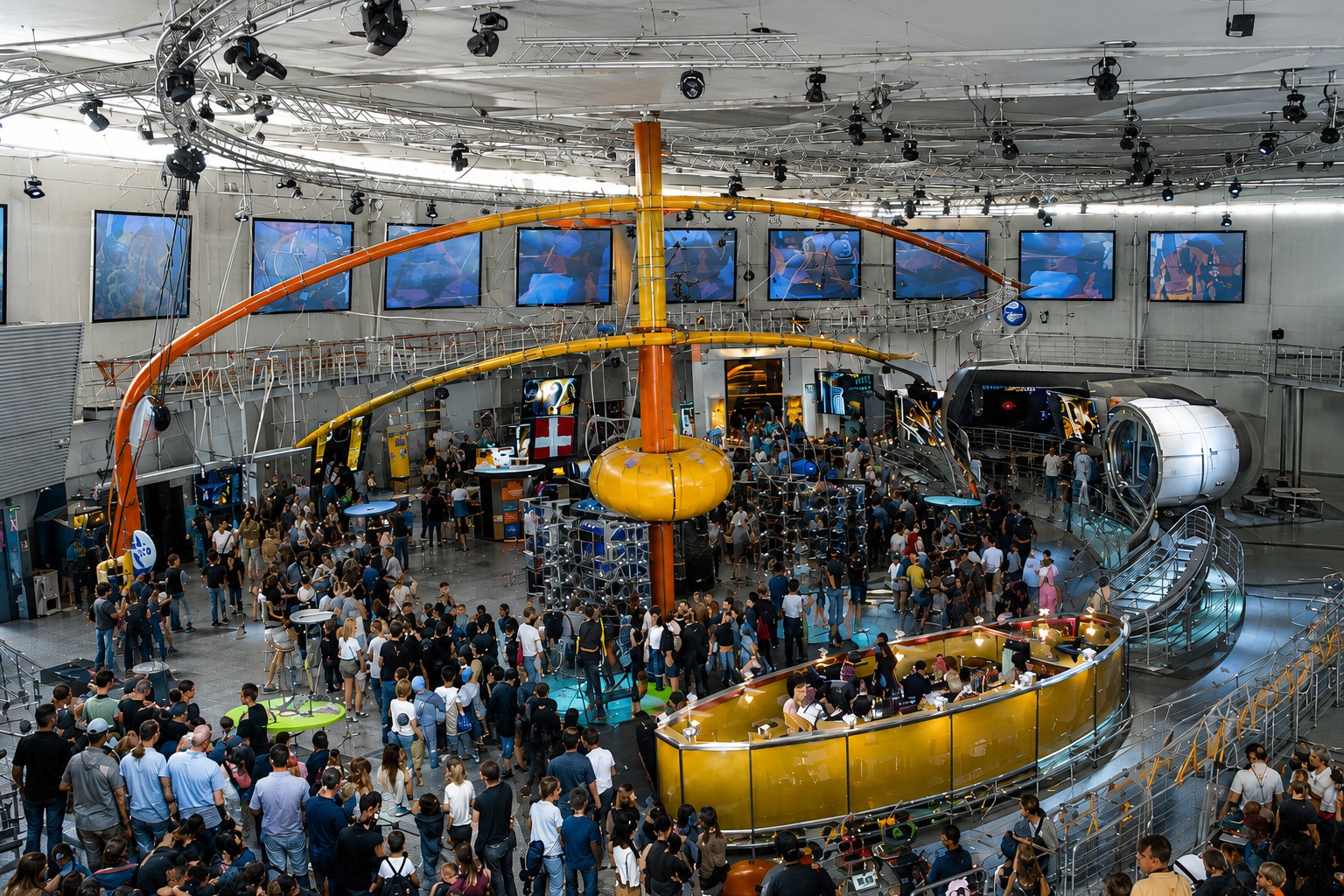
The sixteen German federal states were present too, each represented by a distinctive cultural, technical or historical object. The result was a pavilion that moved between architecture, spectacle and a portrait of Germany at the beginning of a new century. It was busy, theatrical and full of different viewpoints, exactly the kind of place that rewarded another look.
Inside the German Pavilion
And then there were the things you simply didn't expect
Some memories are difficult to explain because, twenty-six years later, they sound almost invented.
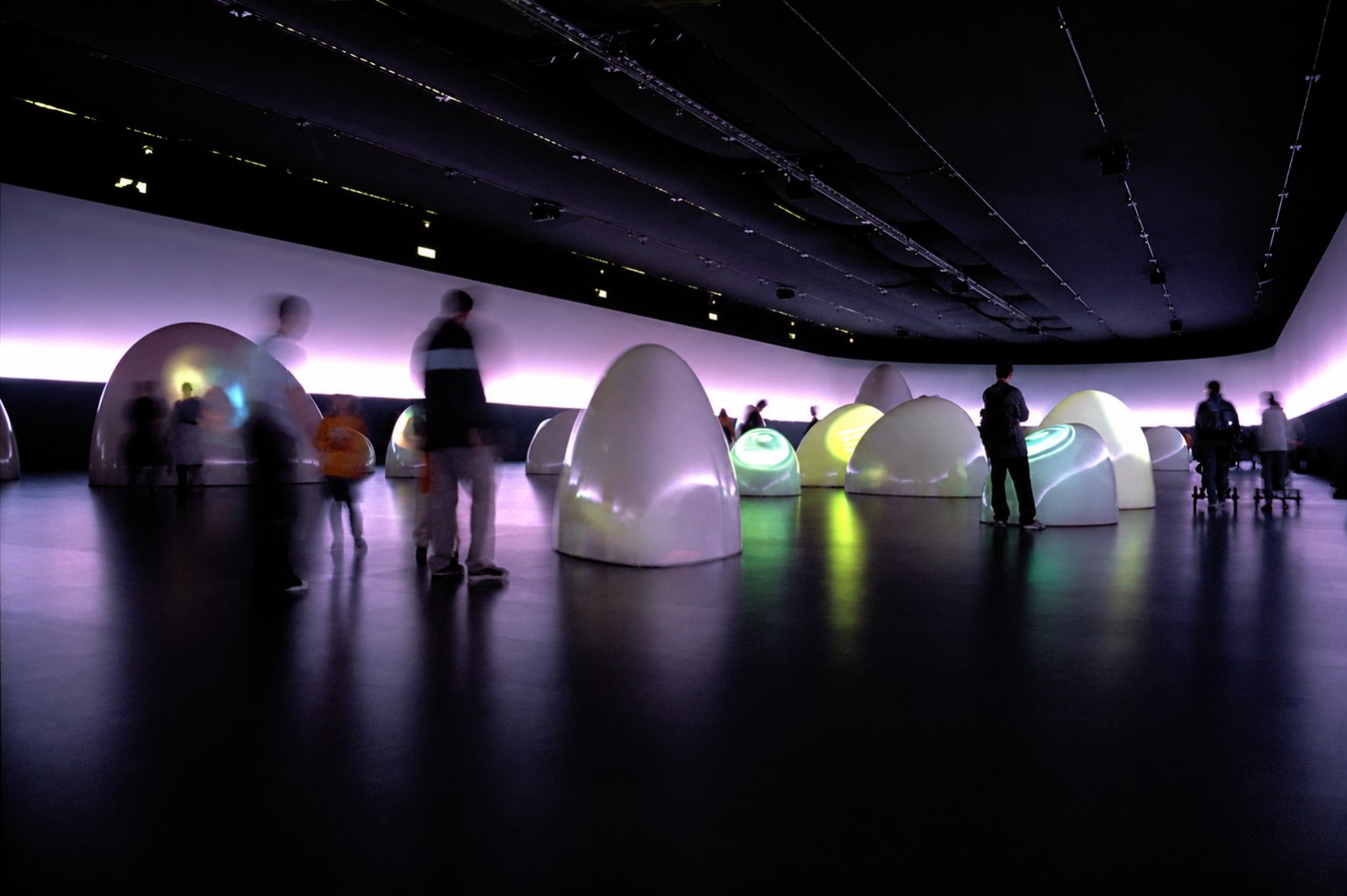
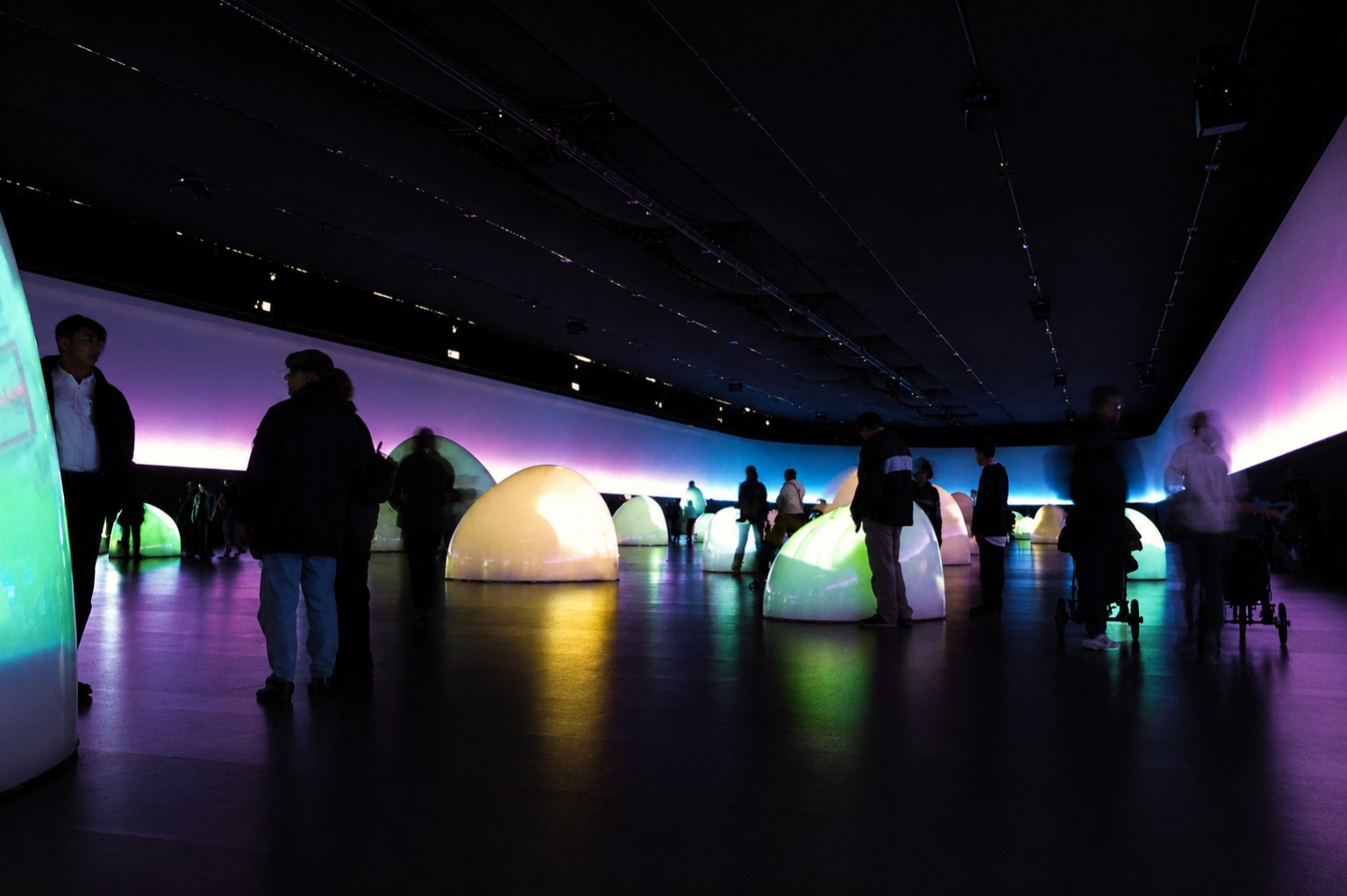
I remember entering a dark hall and seeing strange luminous egg-shaped objects. They glowed in shifting colours and seemed to move through the darkness with a life of their own.
I can still picture them today.
Sometimes it was enough to stand there and wonder.
Elsewhere there was an artificially created tornado. There were multimedia installations, experimental architecture, performances and objects whose purpose wasn't always immediately obvious. That uncertainty was part of the pleasure. The EXPO rewarded curiosity.
The world next door
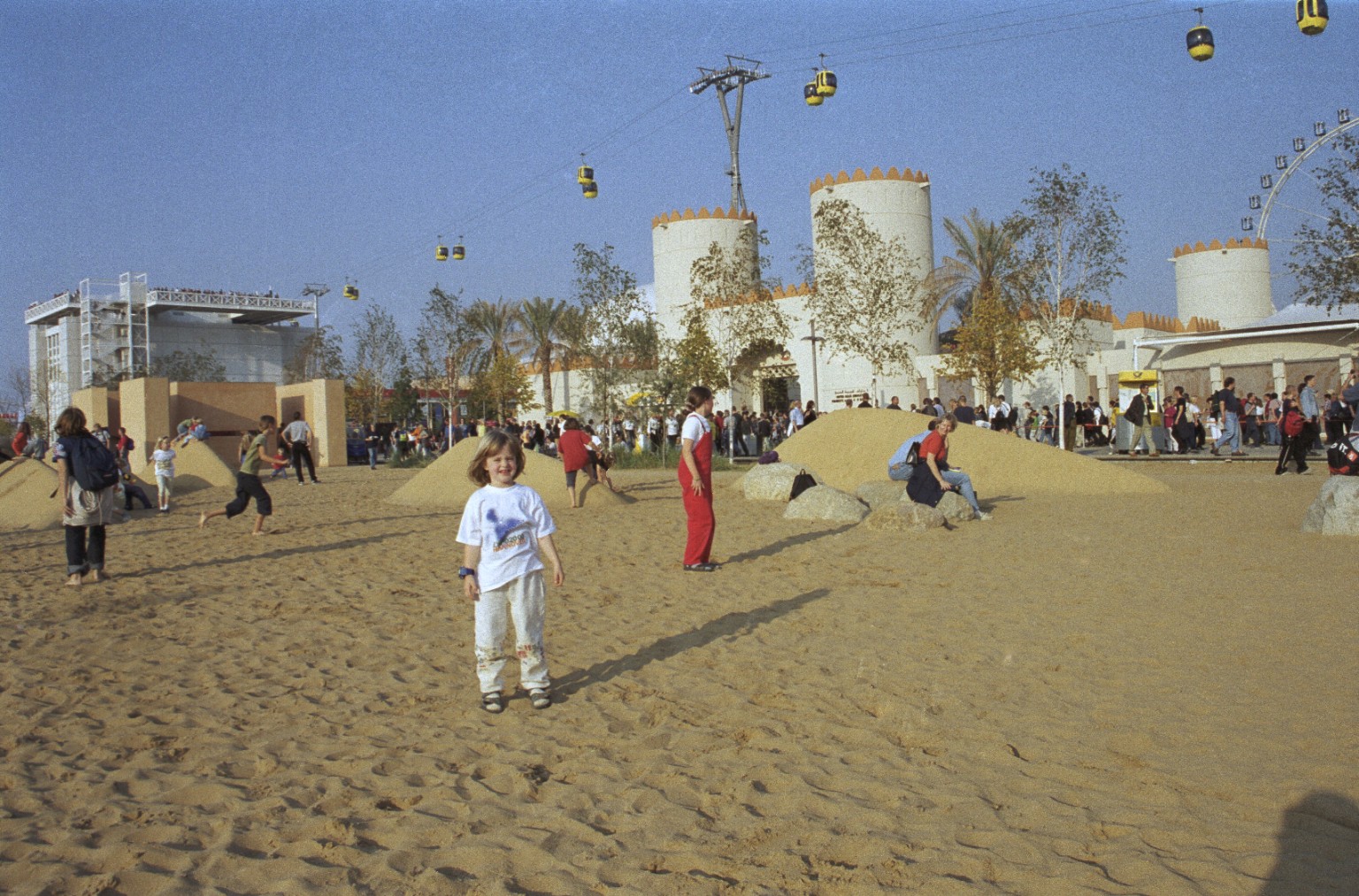
For a few months, discovering another culture could be as simple as walking into the next building. Different languages, music, food, architecture and ways of thinking were suddenly gathered in one place.
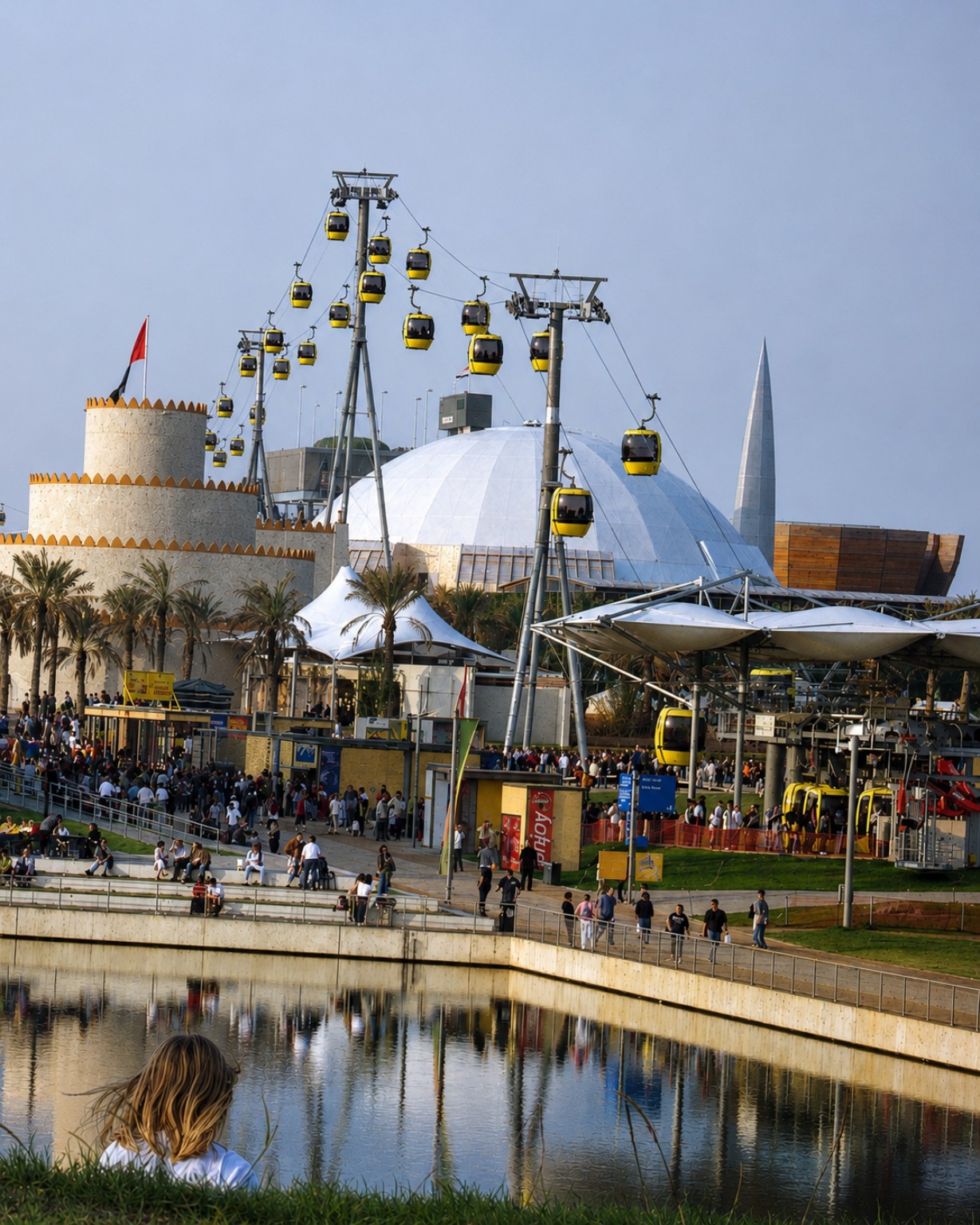
United Arab Emirates Pavilion · EXPO 2000
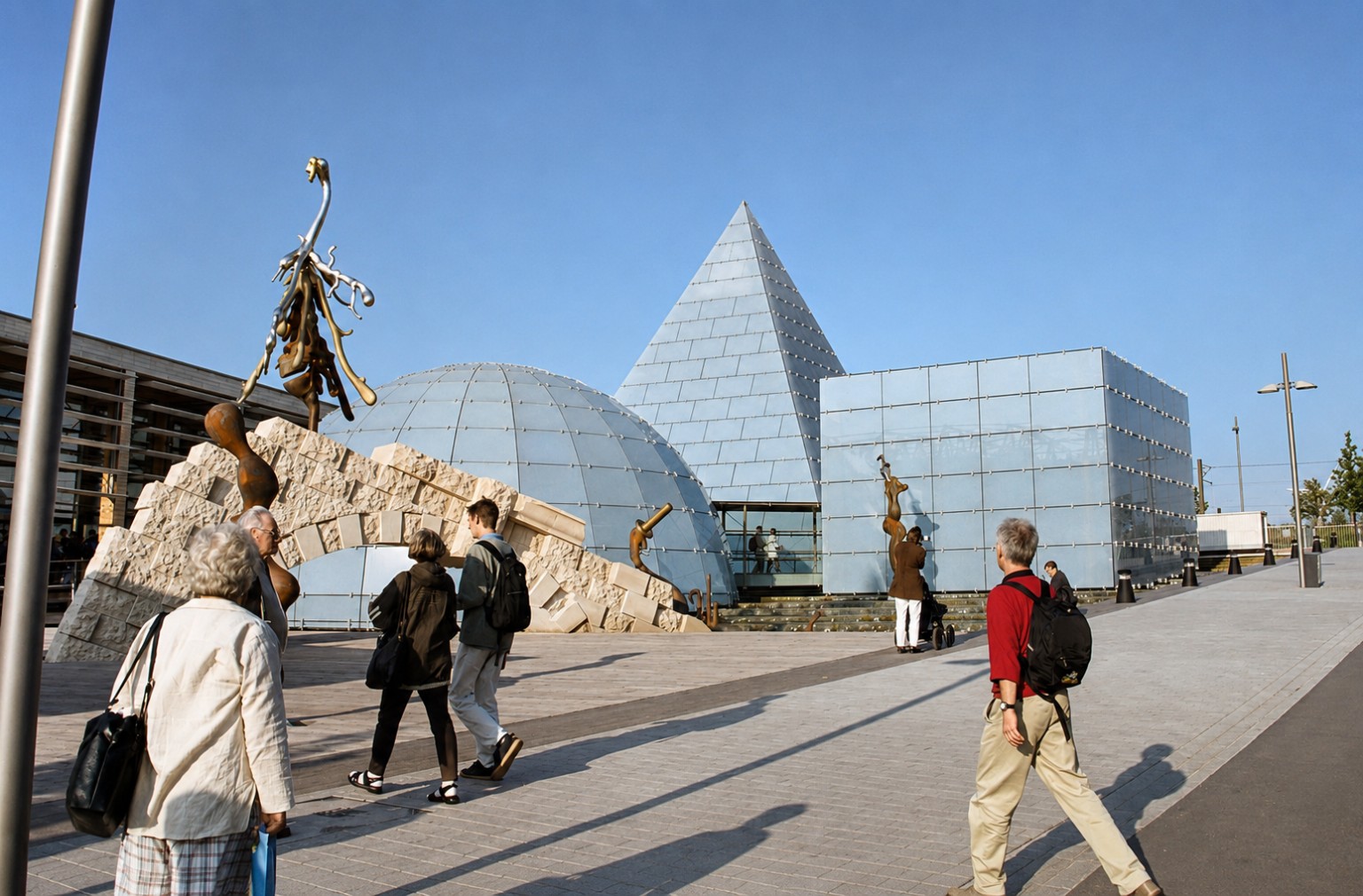
The Danish Pavilion · EXPO 2000
That was one of the great pleasures of the EXPO. You could spend a day moving from one part of the world to another without ever leaving Hannover.
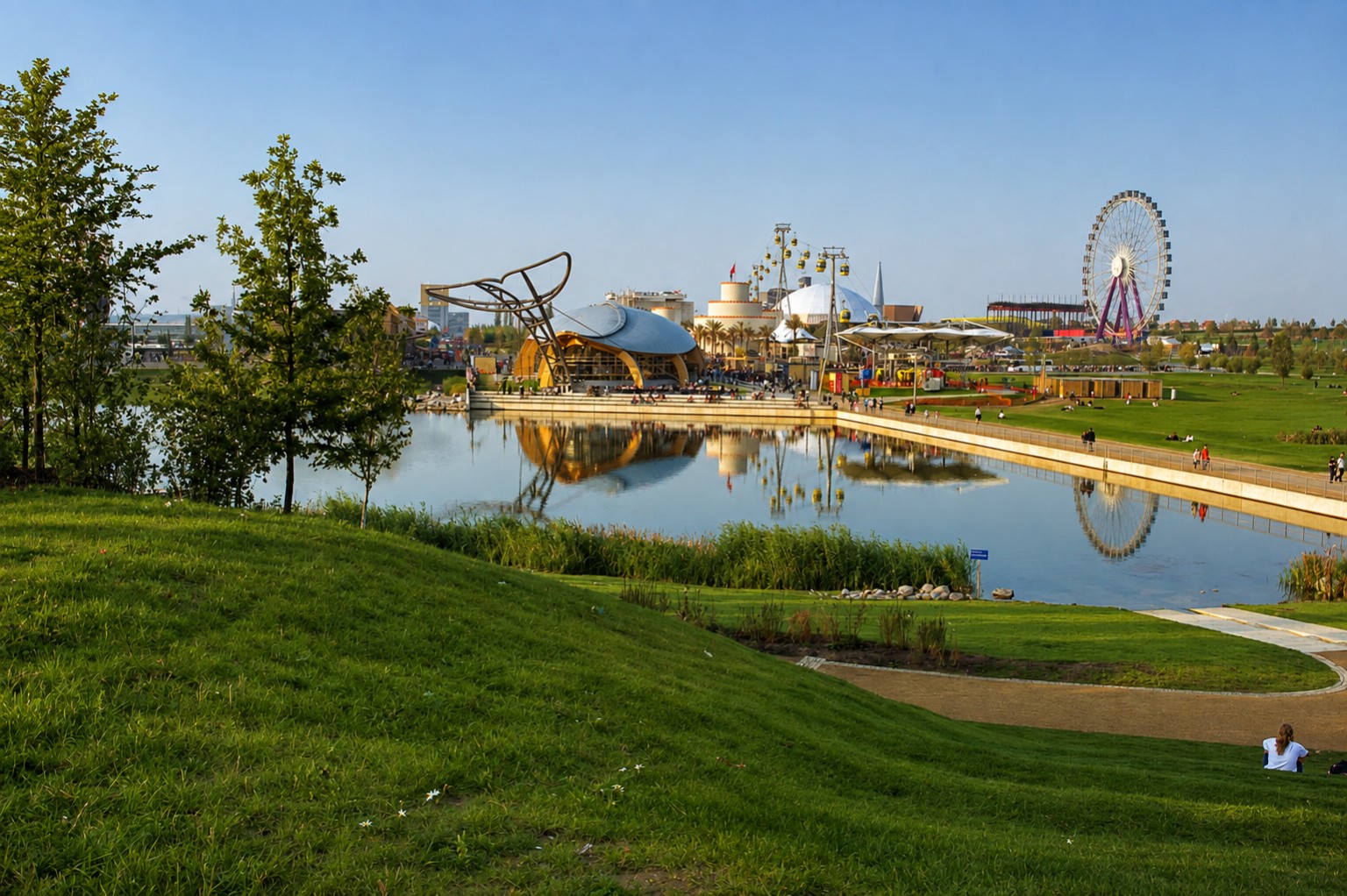
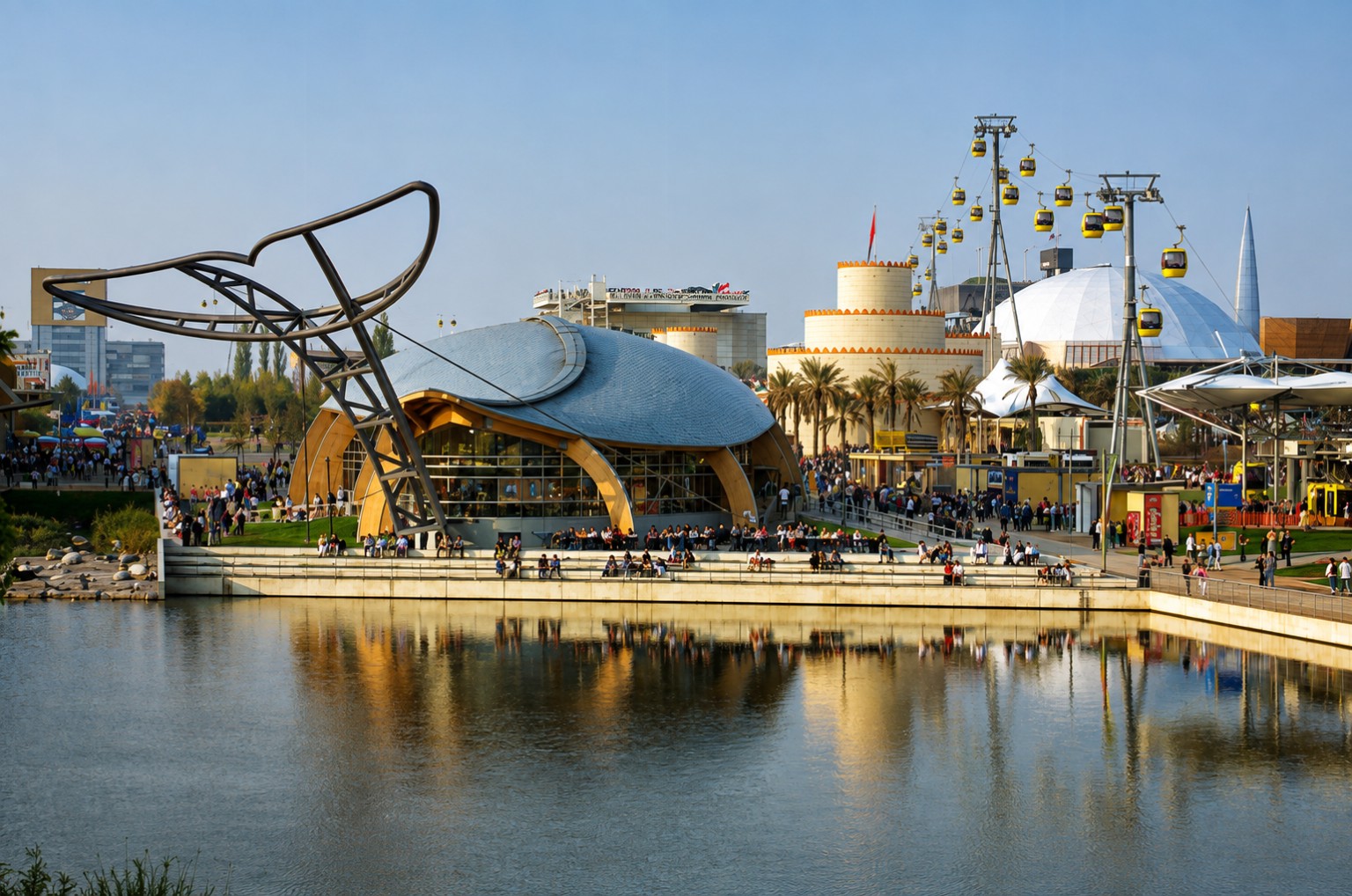
The Pavilion of Hope, the EXPO Whale · Water, pavilions and cable cars
Above it all
The little yellow cable cars became part of the landscape. They crossed the vast grounds high above the crowds and turned getting from one end of the EXPO to the other into an experience of its own.
The yellow EXPO cable cars above the grounds
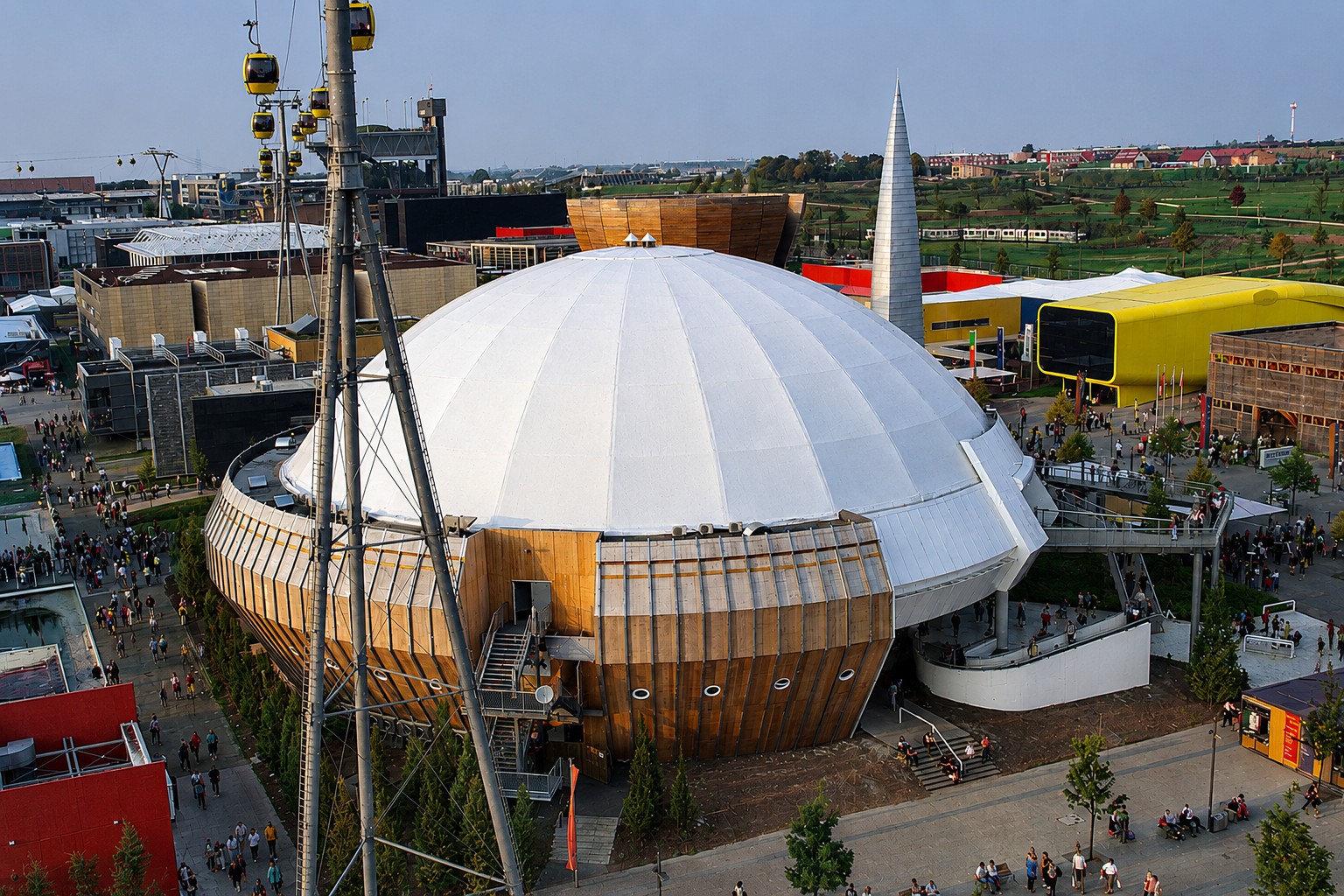
From above, the whole place changed perspective. Pavilions, gardens, water and thousands of people passed beneath you. For a few minutes you simply floated above this temporary city.
From the cable car: pavilions, paths and the moving crowds below
Arriving, meeting, moving on
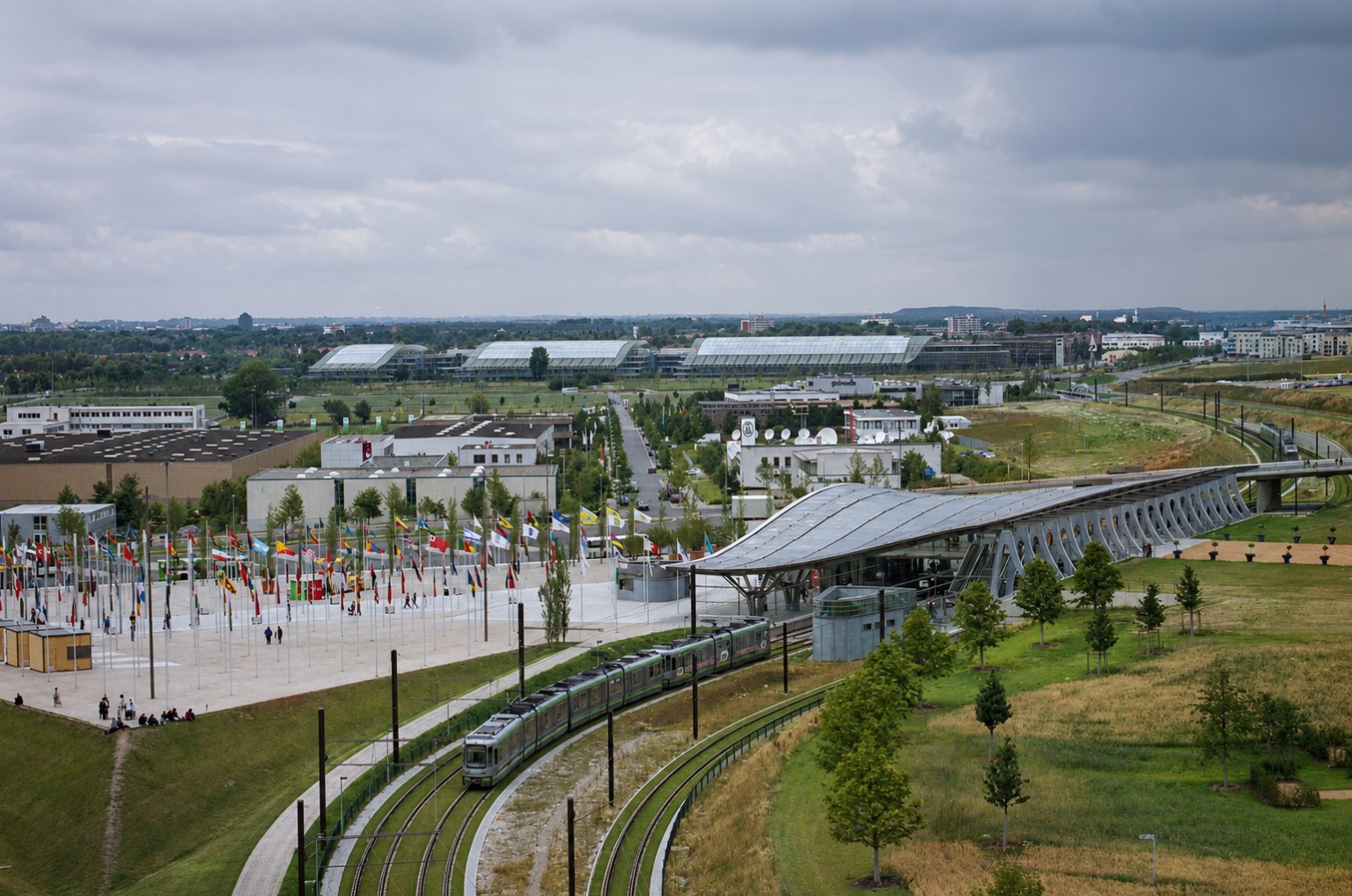
The EXPO had several entrances, and each arrival had its own rhythm. At EXPO Ost, the Stadtbahn brought visitors almost directly to the grounds.
EXPO Ost: the Stadtbahn terminus at one of the main entrances
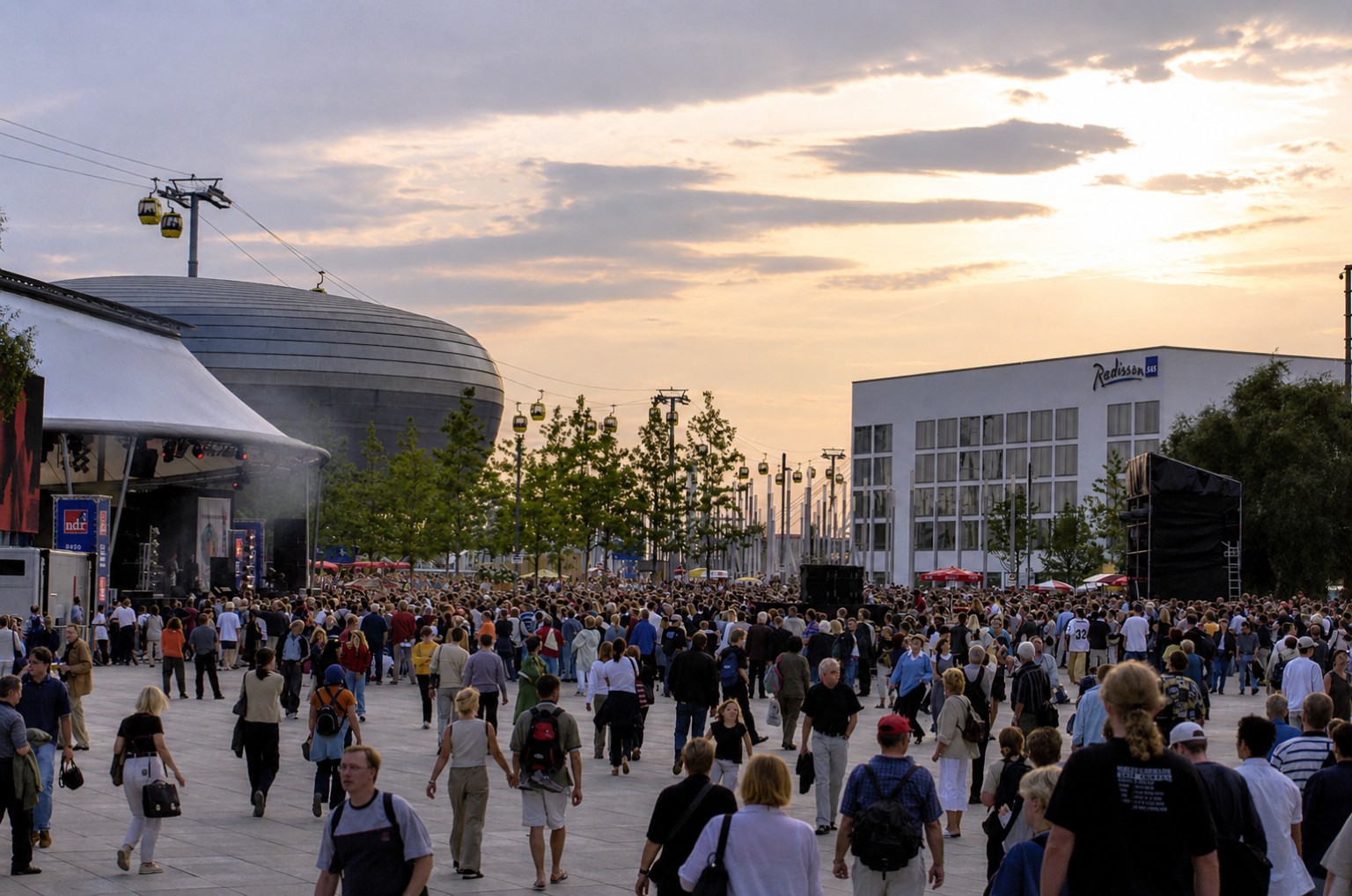
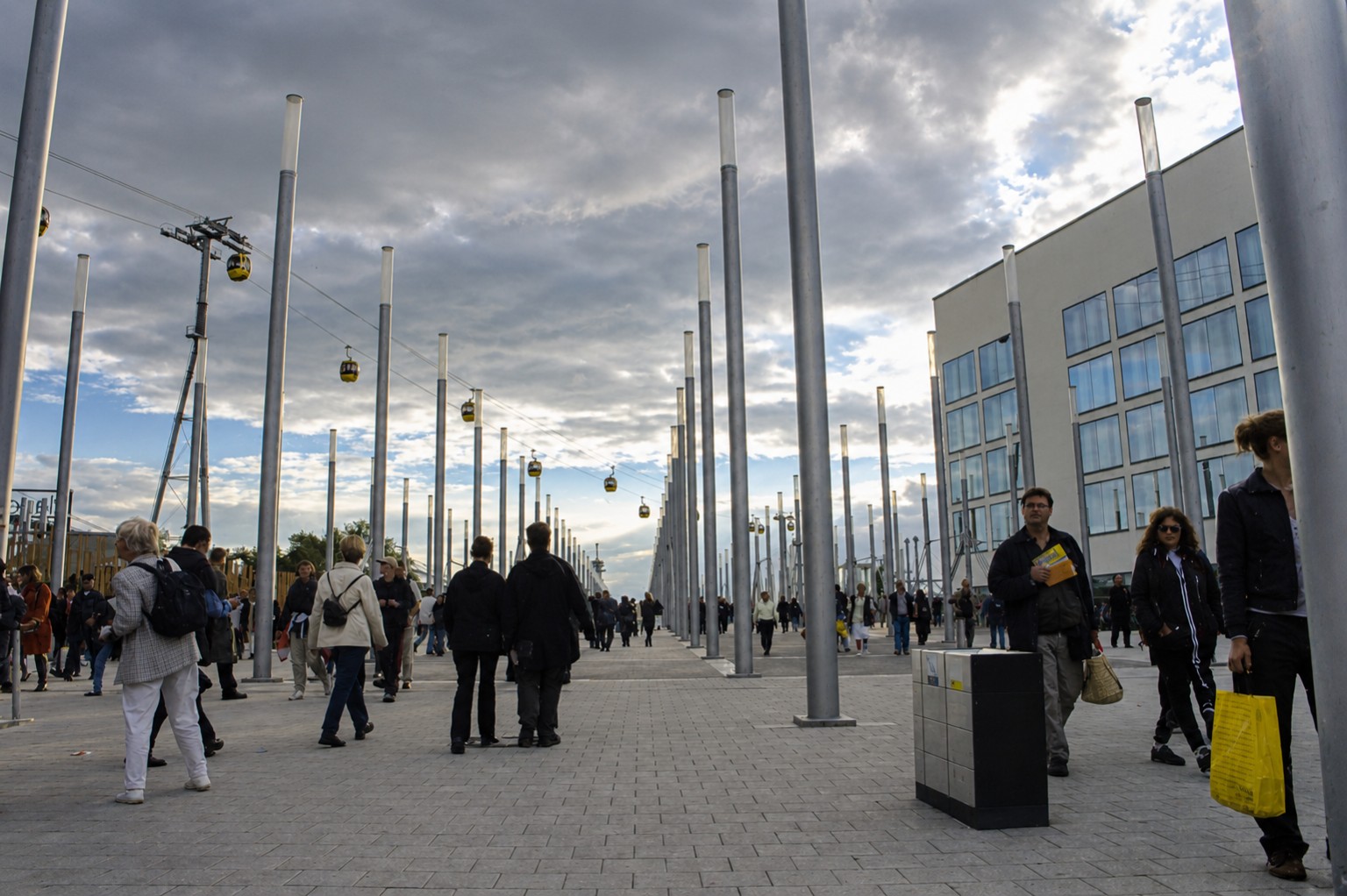
From there, the long approach towards the Plaza became part of the experience itself: people streaming in, cable cars overhead, and the sense that the day could lead almost anywhere.
Entrance East, on the way towards the EXPO Plaza
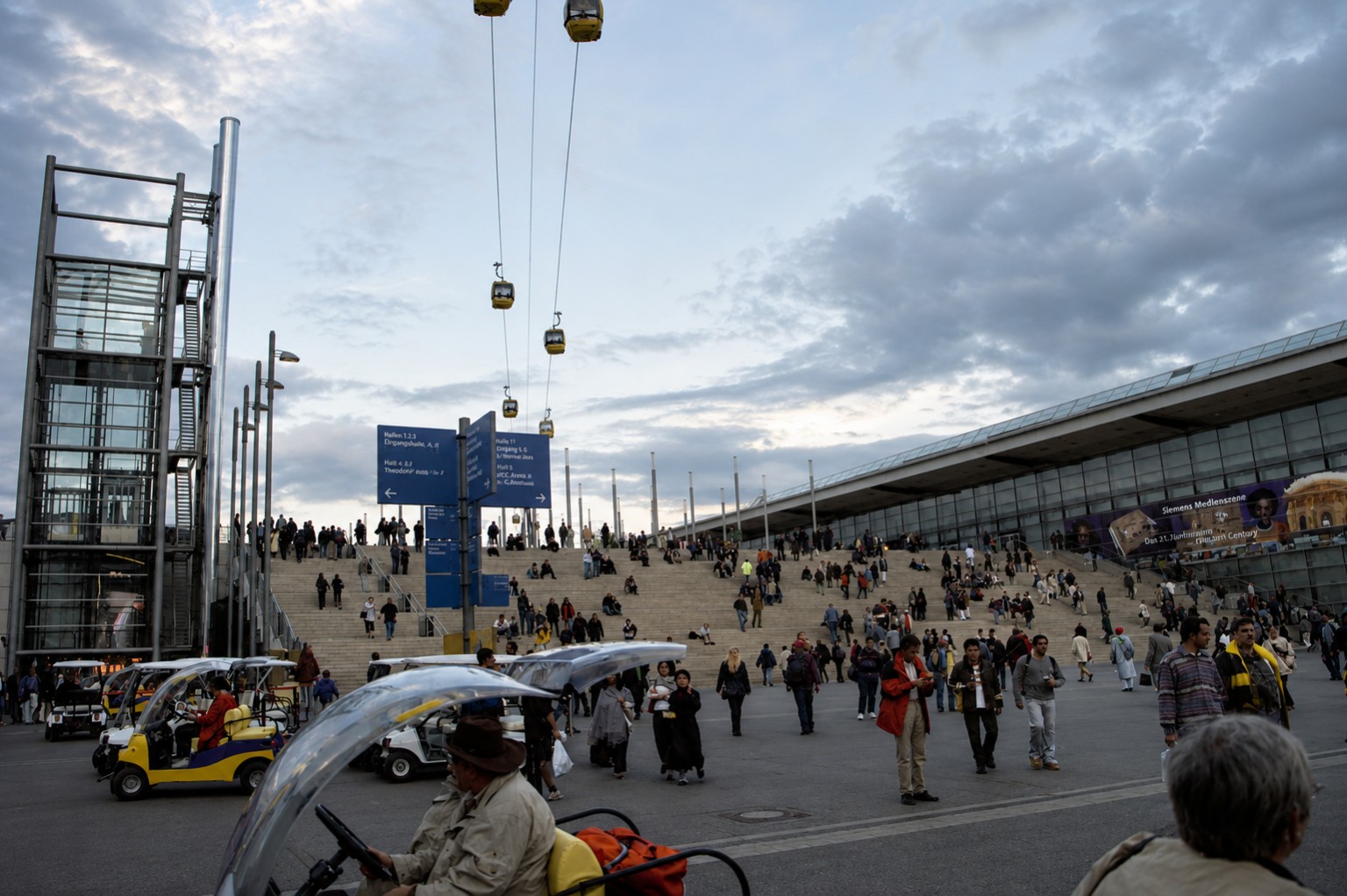
A great meeting place west of the EXPO Plaza. The broad steps led towards the western part of the grounds and became a natural place to sit, meet and watch the crowds pass by.
The meeting place west of the EXPO Plaza
Music everywhere
Music was woven into the EXPO from the beginning. More than 15,000 cultural events took place during its run, and the programme ranged from intimate performances to major concerts. Among the artists who appeared were Luciano Pavarotti, Carlos Santana, Lionel Richie, Ray Charles, Patricia Kaas, Herbert Grönemeyer and Joe Cocker. Hannover's Scorpions performed their Moment of Glory programme with the Berlin Philharmonic, while the opening celebrations brought names such as Bon Jovi and Kylie Minogue to the EXPO grounds.
But music was not confined to the biggest stages. It was part of the atmosphere. You might hear a concert while crossing the grounds, find a cultural performance outside a pavilion, or simply sit on the broad steps near the Plaza as evening arrived and let whatever was happening become part of the day.
Sometimes we went for nothing at all
Not every visit needed a plan. That is something I remember particularly fondly.
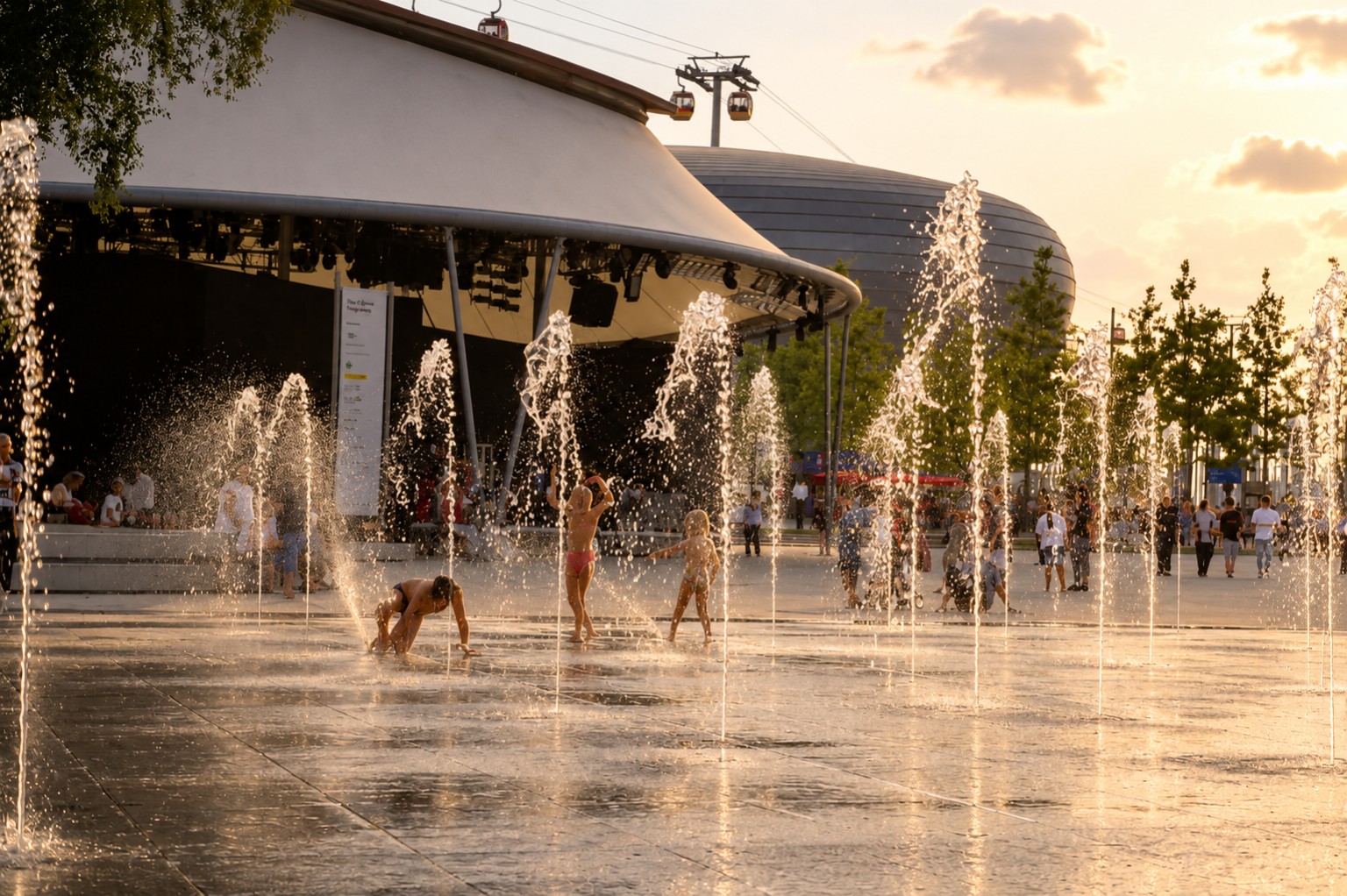
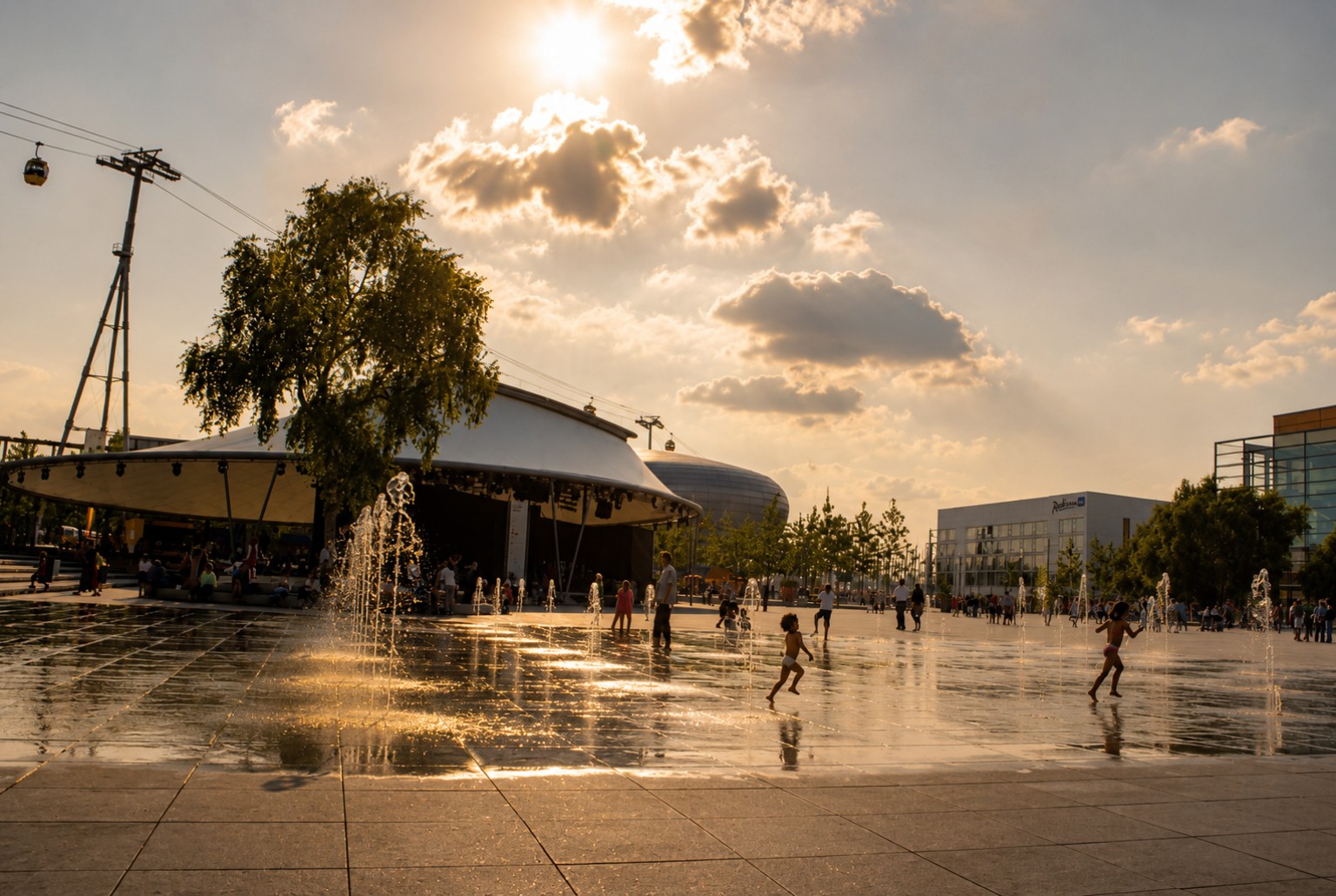
Sometimes it was enough simply to spend an afternoon or evening there. People sitting beside the water. Children running through fountains.
Fountains on the EXPO Plaza in the evening light
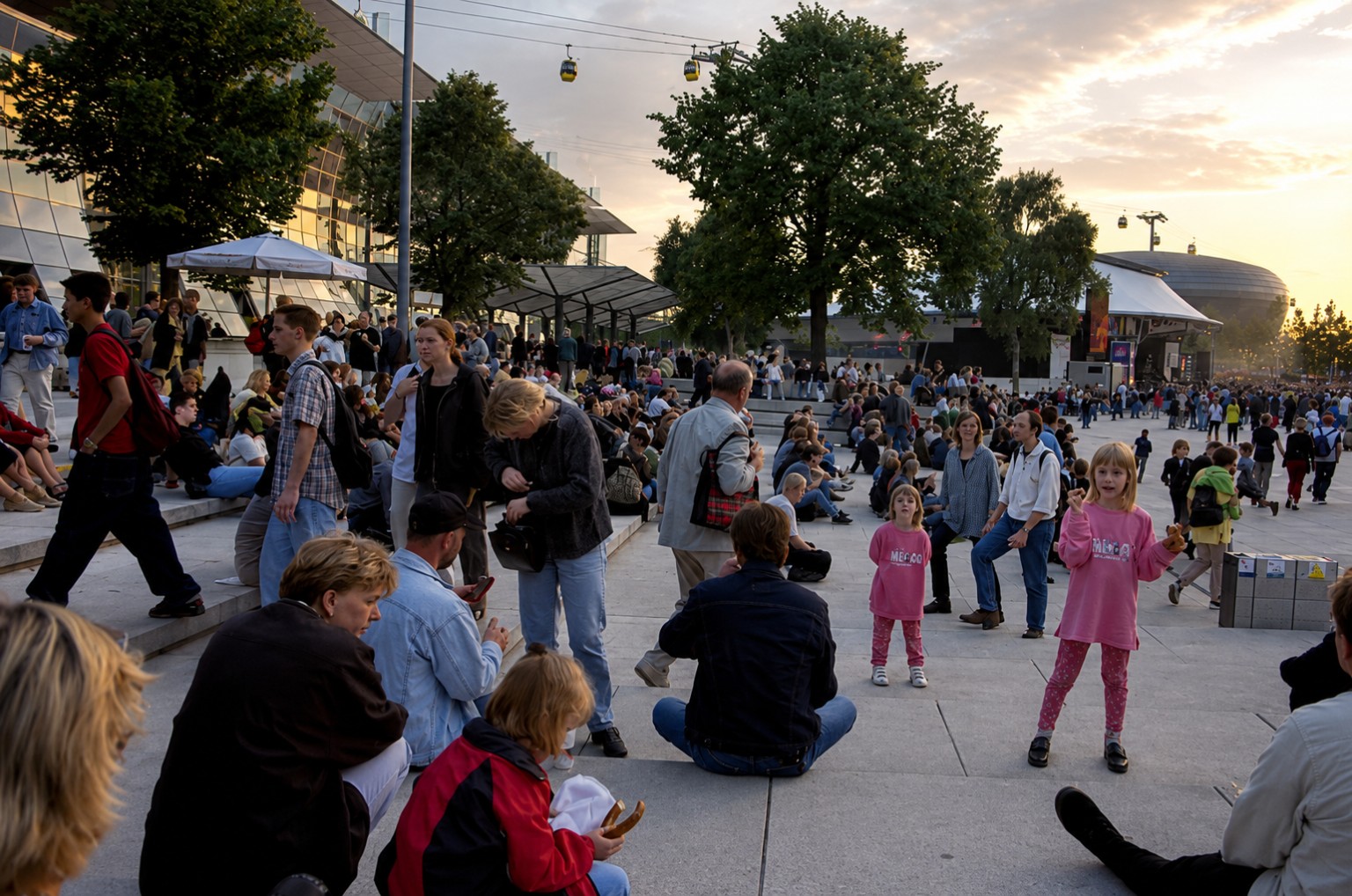
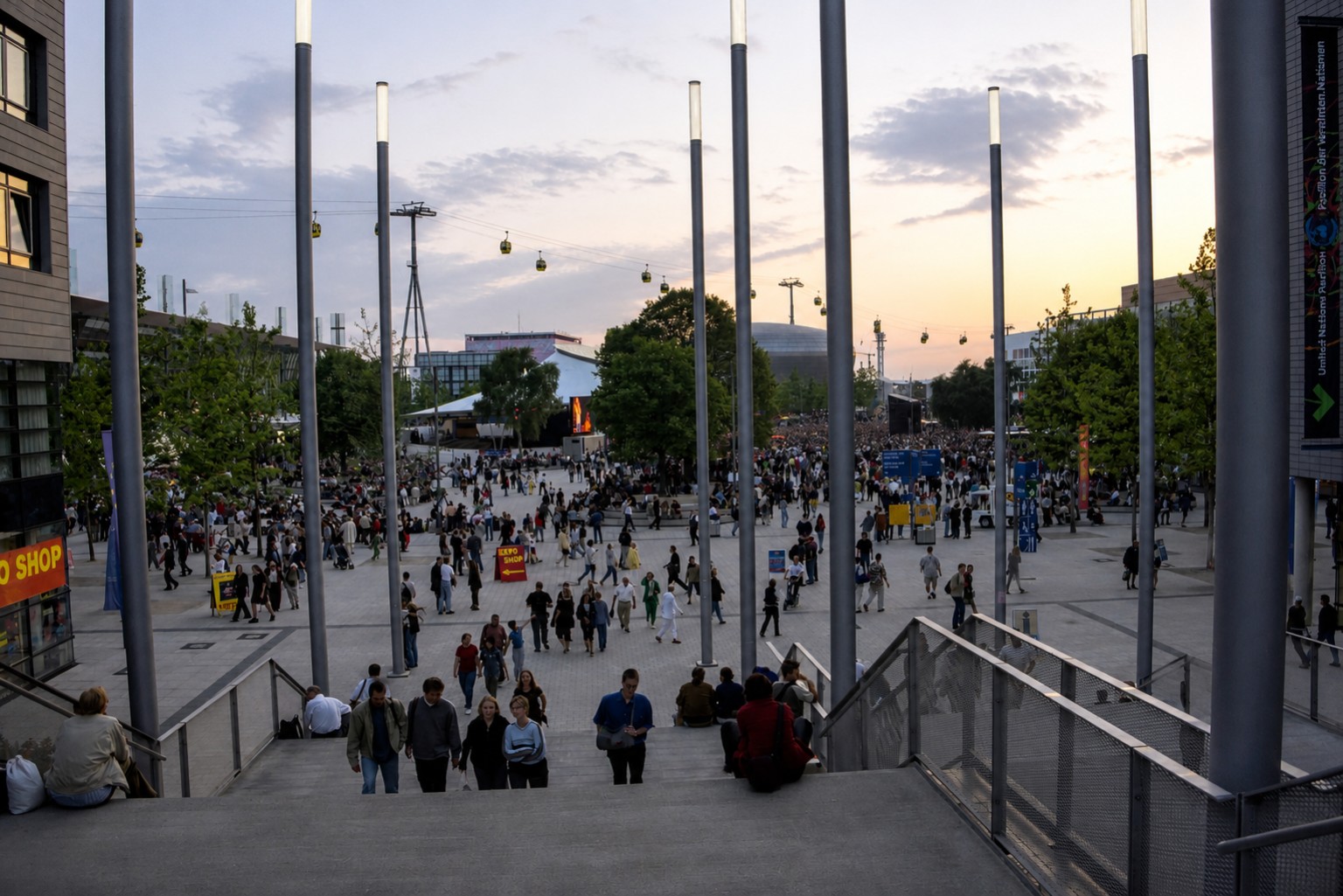
Thousands gathering around the Plaza. Music somewhere in the distance. A cable car passing overhead. The light changing as evening arrived.
Evening on the steps at the EXPO Plaza
Perhaps another concert later. Perhaps another pavilion. Perhaps nothing.
The EXPO could be spectacular, but it could also be wonderfully easy. You could simply be there.
Looking across the EXPO Plaza from the steps
What remains
The gates closed at the end of October 2000. The crowds went home. Some buildings disappeared, others remained, and the yellow cable cars stopped floating above the grounds.
But that isn't how I remember it.
When I look at these photographs today, I remember movement. Water spraying into evening light. Dark summer clouds gathering above futuristic buildings. Crowds filling the Plaza. Music. Colour. Curiosity. And that wonderful feeling that somewhere, just around the next corner, there was still something I hadn't seen.
The EXPO made the world feel enormous and, at the same time, remarkably close. Its openness, curiosity and sheer lightness left something behind long after the pavilions had closed.
For one summer, the world came to Hannover. And I still remember what it felt like.